
BabyOSCAR Training
Early assessment of selective motor control in infancy
BabyOSCAR (Observational Selective Control AppRaisal) is a standardized observational tool for evaluating selective motor control in infants ≤5 months of age. Using a brief video of spontaneous movement, BabyOSCAR characterizes emerging capacity for independent joint control across the body. These early movements are associated with later motor function and distribution of cerebral palsy and may help inform early prognosis and targeted learning opportunities.
Developed at Northwestern University within the Department of Physical Therapy & Human Movement Sciences, BabyOSCAR is supported by a growing body of research examining early selective motor control in infancy.
About
What is BabyOSCAR?
BabyOSCAR is a standardized observational assessment designed to characterize selective motor control during early infancy. The tool uses brief video recordings of spontaneous movement to evaluate emerging capacity for independent joint control across the body and is intended to complement other early assessments.
What it measures
BabyOSCAR captures observed independent joint movements across the body to characterize emerging capacity for selective motor control during early infancy.
Why it matters
Early motor behavior provides important information about neurodevelopment. BabyOSCAR is designed to support earlier and more precise clinical understanding of independent joint control and may contribute to improved early cerebral palsy prognosis and clinical decision-making.
Research foundation
BabyOSCAR is validated, reliable, and is based on neurophysiology of the developing brain. BabyOSCAR complements existing early detection approaches, is non-invasive, and does not require additional hands-on assessment of the infant.
Training
Upcoming BabyOSCAR courses
Current scheduled training is listed below.
Chicago, Illinois
Dates: December 12–14, 2026
Location: Northwestern University
Status: Open
Format: In-person course
Brisbane, Australia
Dates: February 28–March 2, 2027
Location: Queensland Cerebral Palsy and Rehabilitation Research Centre, University of Queensland
Status: Open
Format: In-person course
Belo Horizonte, Brazil
Dates: April 2–4, 2027
Location: Belo Horizonte, Brazil
Status: Save the date
Format: In-person course
Contact: Vanessa Barbosa
Course format
- Lectures on the conceptual basis of BabyOSCAR
- Video-based scoring practice
- Discussion of interpretation and application
- Opportunities for questions and case-based learning
Who should attend
- Physical therapists (PTs)
- Occupational therapists (OTs)
- Speech-language pathologists (SLPs)
- Neonatologists
- Neurologists
- Physiatrists
- Pediatricians
- Developmental pediatricians
- Researchers studying infant motor development
Faculty
Teaching faculty
BabyOSCAR training is taught by faculty at Northwestern University who developed and validated the assessment.
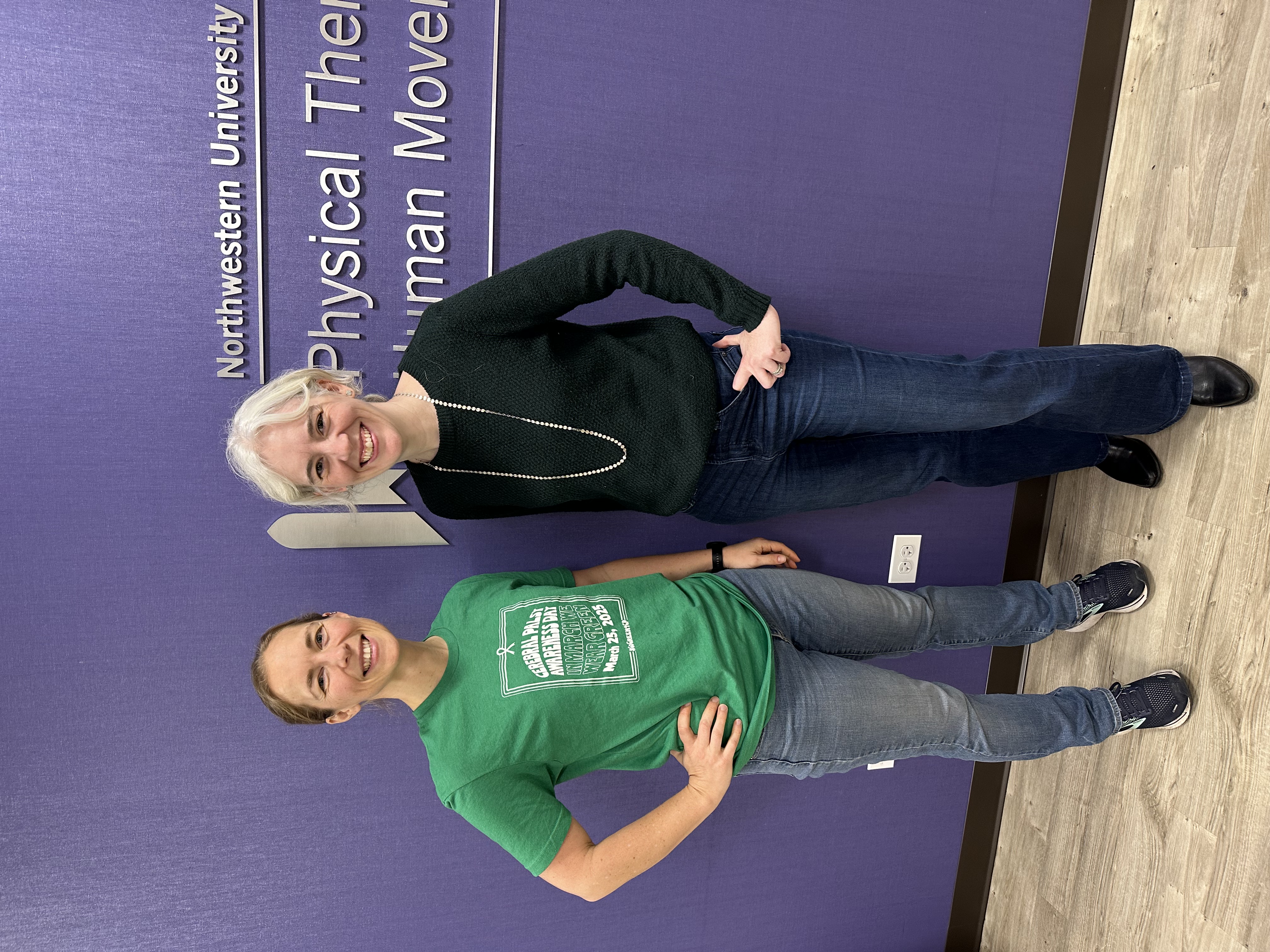
Theresa Sukal-Moulton, DPT, PhD
Associate Professor
Northwestern University
Colleen Peyton, DPT, MSCI
Associate Professor
Northwestern University
Evidence
Publications and supporting evidence
Moulton et al. (2024). Baby Observational Selective Control AppRaisal (BabyOSCAR): Convergent and discriminant validity and reliability in infants with and without spastic cerebral palsy. Developmental Medicine & Child Neurology.
Barbosa et al. (2024). Baby observational selective control appraisal (BabyOSCAR): construct validity and test performance. Developmental Medicine & Child Neurology.
Peyton et al. (2025). Emergence of Selective Motor Control in Early Infancy: A Longitudinal Study of Infants Born Preterm With and Without Cerebral Palsy. The Journal of Pediatrics.
Drobyshevsky et al. (2026). Multimodal MRI of white matter development and selective motor control in preterm infants. NeuroImage: Clinical.
Community of Practice
Protected educational resources
This section is intended for trained BabyOSCAR users and may include video examples, teaching cases, scoring practice, and course materials.
Contact
Get in touch
Course inquiries
Collaboration and hosting inquiries
For research collaboration, implementation questions, or interest in hosting a future BabyOSCAR training, please contact colleen.peyton1@northwestern.edu .